Why Uganda Must Migrate to SAP S/4HANA Before 2027 Ends Fast
 Anup Sharma Edify
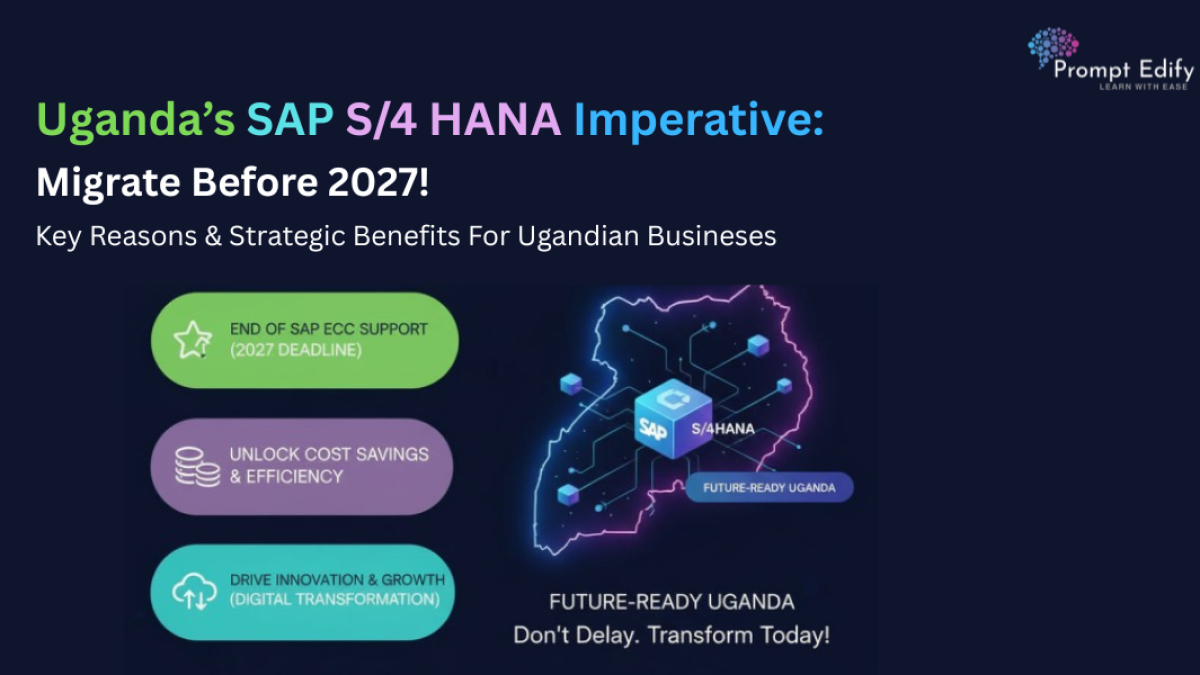
SAP ECC support ends soon. Ugandan businesses must move to SAP S/4HANA to reduce risk, ensure compliance, cut costs, and unlock real-time insights.AI
Enterprise resource planning systems (ERP) continue to play an essential role in today's rapidly changing digital economy by providing scalable solutions to help streamline processes; as such, they form the foundation of all types of organisations — from product manufacturers and distributors to financial institutions and government agencies — across Uganda. For decades now, unquestionably, SAP has been the primary source of enterprise resource planning systems within Uganda, as it has been relied upon as the go-to platform for enterprise resource planning for Uganda's companies. Recently, SAP announced the end of mainstream support for its legacy enterprise resource planning systems (SAP ECC), which could potentially create problems for these companies unless they migrate to the next generation of enterprise resource planning systems, SAP S/4HANA Migration, or risk incurring operational disruption, loss of reputation, and brand damage.
The SAP Support Deadline: Why 2027 Matters
SAP has established strict deadlines for ending support of the older ECC to S/4 Hana (ERP Central Component) and will not continue to support them. Support for EHP 0 - 5 (the most traditional ECC systems) & EHP 6-8 (the newest/type of SAP systems) is as follows: EHP 0-5 will no longer be supported as of 12/31/2025, and EHP 6-8 will no longer be supported as of 12/31/2027.
After these deadlines have passed, SAP will not provide updates to security, compliance, or fixes to existing software for systems currently using SAP ECC. There are options for extended support through 2030. Extended support will incur additional fees (typically hefty, as compared to a standard maintenance contract).
For organisations in Uganda, particularly those that are regulated and/or have large digital footprints, these deadlines will have a strategic impact on potential future growth. Without migrating to SAP S/4HANA before the expiration of standard Support from SAP, the systems your organisation operates on will not only cease receiving support but will also become less secure and will not provide the foundation necessary to take advantage of future innovations in SAP products.
Operational Risks of Delaying the Migration
There are serious implications for operating an ERP system that is no longer supported.
1. Security Risks and Compliance Concerns
Unsupported Software does not receive security updates and, therefore, is risky. Unsupported systems are more at risk of cyberattacks, breaches, and malware. This increases the risk to an organisation’s continuing operations, reputation, and regulatory penalties. For instance, according to Uganda's Data Protection and Privacy Act of 2019, robust protection of data is required through strong internal controls. Therefore, continuing on ECC after the end of support increases the compliance risk associated with being compliant with data protection legislation.
2. Higher Maintenance Costs
When the mainstream support phase has ended, the only way for an organisation to get technical fixes is through the extended support phase, which is far more expensive than the regular support phase and doesn't cover as much. The cost of extended maintenance can increase the total cost of ownership and take away money from innovation projects. The longer an organisation waits to migrate to a supported platform, the greater the financial burden will be.
3. Halt to Innovation and Competitive Disadvantage
SAP is investing billions in developing its S/4HANA ERP to be the flagship ERP solution moving forward, including all enhancements to its flagship ERP, such as real-time analytics, embedded AI, machine learning capabilities, and increased automation, which will only be developed on the S/4 HANA platform. Therefore, if an organisation delays migrating off generic ECC, it will miss out on transformational opportunities and will have reduced operational efficiency and competitiveness.
Business Benefits of Migrating to SAP S/4HANA
The SAP S/4HANA platform provides significant advantages to companies transitioning from older systems. It enables businesses to grow and evolve digitally while also conforming to support deadlines.
1. Instant Access to Business Insights
Because the SAP HANA platform processes and analytically analyzes data in real time, companies that use S/4HANA will have the ability to make decisions, forecast, and respond to rapid changes in their market in real-time. SAP S/4HANA migration cockpit.
2. Increased Automation and Efficiencies
The modern design of the SAP S/4HANA application allows companies to automate repetitive and routine activities and creates a superior level of integration between operational, supply chain, and finance functions. This reduces the number of manual interventions, allowing companies to reduce their operational costs and improve overall productivity.
3. Ability to Scale and Cloud-Ready
The different S/4HANA deployment options (private, public, and hybrid) allow Ugandan companies to flexibly scale their IT resources on an as-needed basis. Companies that deploy S/4HANA on the cloud also achieve lower overall infrastructure costs and improved disaster recovery capabilities.
Timing Is Critical: Don’t Wait Until the Last Minute
Migrations to SAP usually occur over the course of approximately 18 to 36 months, depending on the type of system, the amount of data being transferred, how customised each system is, and how many other systems it may be interacting with. If organisations start early enough (preferably well before their current support expires), they will have plenty of time to perform proper planning, perform readiness assessments, cleansing and migrating data, as well as having their change management processes already in place.
When organisations delay starting their SAP S/4Hana migrations until the last minute, they decrease the time that is available for them to migrate successfully and therefore increase the risk associated with migrating successfully. In addition, delaying an SAP migration until the end of the support agreement can increase costs due to an increase in demand for SAP consultants, and skills needed to execute a successful migration will elevate the price associated with those services and will add additional strain on their migration budgets.
Practical Steps for SAP Customers in Uganda
For any organisation yet to embark upon their ERP transition journey to SAP S/4HANA, you will need to establish an evolutionary, systematic approach as per the steps below:
1. Undertake a Detailed Readiness Assessment
This will include assessing your current SAP environment,t including custom coding, integrations, and data quality. Identify which processes need to be redesigned or re-engineered in order to be aligned with SAP s4hana.
2. Create a Migration Roadmap
This is critical to have defined timeframes and align them against the SAP support calendar. It also should include time for testing, training, and phased go-live where feasible.
3. Invest in Skills Development and Change Management
Migration is not purely a technical process. When migrating to SAP S/4HANA, you will impact all users across finance, HR, Logistics, and Operations. Structured training and developing skills within your organisation are essential to enhancing user acceptance and minimising resistance to change.
4. Selecting the Right Migration Path
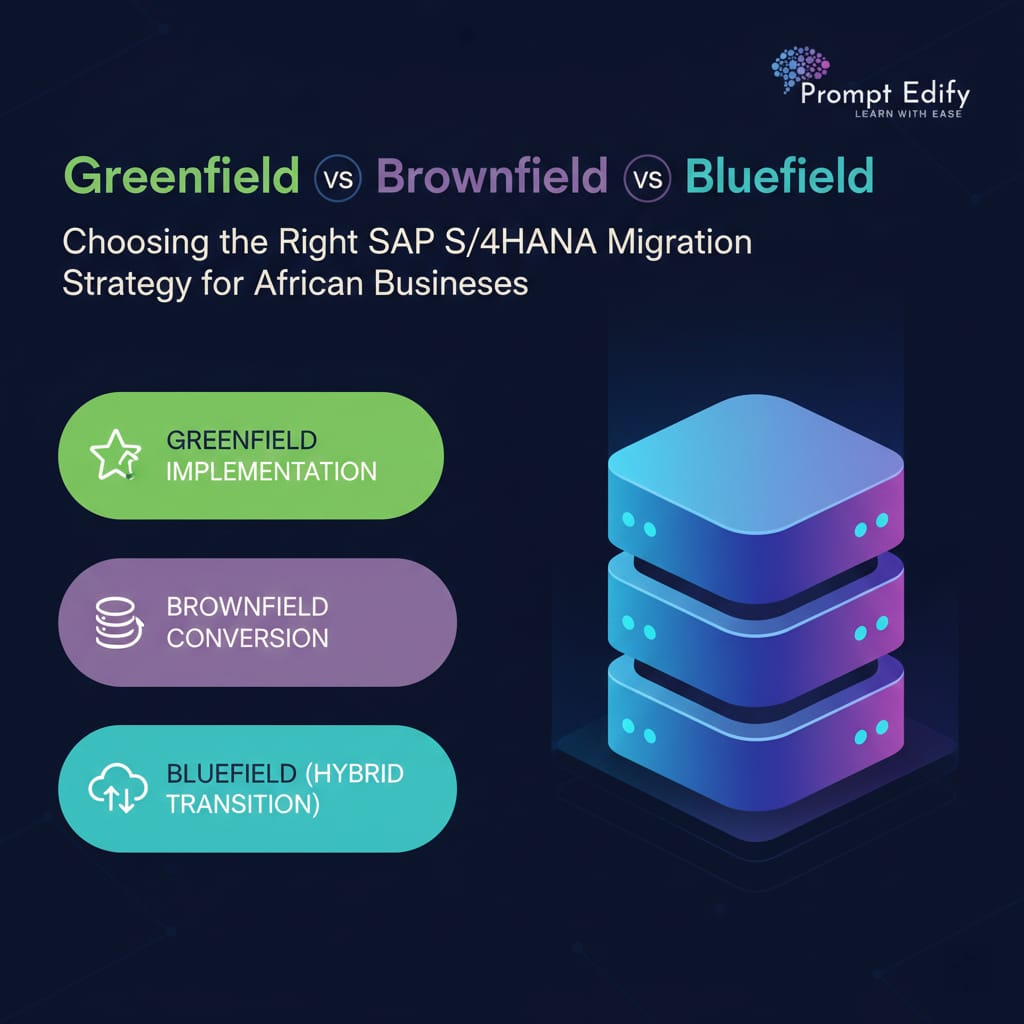
There are different choices of how you undertake the migration: Brownfield-Technical system conversion, Greenfield- New implementation, or Selective Data Transition. Depending on the objective and complexity of your organisation will determine which of the options you should proceed with.
Conclusion: Act Now to Secure the Future
The need for Ugandan companies to migrate to SAP S/4HANA is critical and complex due to the impending SAP deadline for support. It is not just a decision of whether or not to migrate; it also involves determining when and how to do so in a manner that protects business continuity, improves operational resiliency, and provides future-ready functionality.
With SAP withdrawing all mainstream support from ECC at the end of 2027, businesses that wait too long are faced with potential security vulnerabilities, compliance challenges, increased operating expenses, and an inability to achieve innovation. The clear option is to take action quickly by thoroughly planning, utilizing industry best practices, and fully engaging in the entire digital transformation process with SAP S/4HANA.
📞 Contact Prompt Edify today!
📱 +27740294414 | (+91) 99932 86938
📧 contact@promptiFy.com | Wecare@promptiFy.com
🌐 https://promptedify.co.za/
Categories: : SAP Migration, Education

'Learn With Ease'
Best Software & IT Training Academy
Corporate Office (INDIA)
Prompt Edify (OPC) Pvt. Ltd.
4th Floor #15, City Vista Tower,
Fountain Road, Kharadi,
Pune(MH)
PIN- 411014
International Subsidiary Office (SOUTH AFRICA)
Prompt Edify (OPC) Pvt. Ltd.
18 Gustav Preller Street,
Vorna Vally, Midrand Johannesburg,
South Africa
PIN: 1686